County Strategies & Policies
Key policy and strategy documents guiding food security and nutrition action in Kakamega County, drawn directly from county source documents.
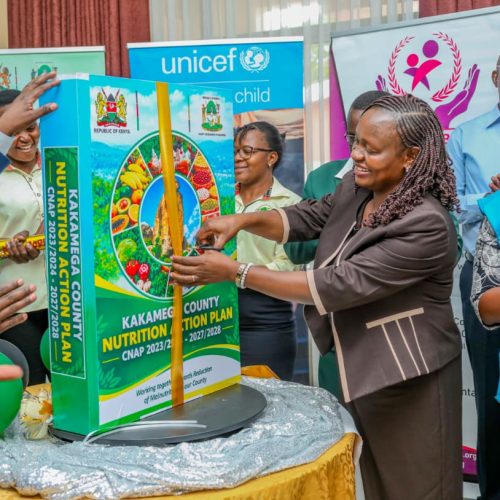
County Nutrition Action Plan (CNAP)
2023 – 2027A five-year multi-sectoral roadmap toward a malnutrition-free county, led by the Department of Health with partners including UNICEF, HKI, WVK and KMET.
County Agri-Nutrition Implementation Strategy (CANIS)
2023 – 2027Integrates nutrition into the agriculture sector through seven priority focus areas, led by the Department of Agriculture with support from USAID and Save the Children.
Maternal & Child Nutrition Policy Brief (MSN)
Investment CaseMakes the economic case for scaling up nutrition investment, with every shilling returning eight in benefits (BCR of 8:1).
MIYCN Social & Behaviour Change Strategy
“Obulesi Obulahi”Promotes optimal maternal, infant and young child nutrition in the first 1,000 days through social and behaviour change communication.
County Nutrition Action Plan (CNAP) 2023–2027
The CNAP is the county's five-year multi-sectoral framework for ending malnutrition in all its forms. Anchored on the vision of a malnutrition-free county, it coordinates nutrition-specific and nutrition-sensitive interventions across sectors and partners, with clear targets drawn from the latest survey data.
CNAP Outlines 14 Key Result Areas with their Strategic objectives, Strategies and interventions
The KRAs
MIYC
Maternal, Newborn, Infant and Young Child (MIYC) nutritional well-being enhanced with sustainable reduction of malnutrition.
Improved nutritional well-bein
Improved nutritional well-being of older children, adolescents, adults and older persons
Food Safety & Quality
Enhanced Industrial Fortification for prevention and control of micronutrient deficiencies
Nutrition and dietetic
Enhanced clinical nutrition and dietetic services across all level of health care
Sustained nutritional well-being
Sustained nutritional well-being of individuals and communities during emergencies and climate related shocks
Agriculture, Livestock and Fisheries
Enhanced integration of nutrition into agriculture, livestock and fisheries sectors
Health Sector
Nutrition integrated and strengthened across all levels of the health sector
Education Sector
Enhanced integration of nutrition in the education sector
WASH
Enhanced integration of nutrition within the Water, Sanitation and Hygiene (WASH) sector
Social Protection
Nutrition integrated across Social Protection Programmes
Nutrition Governance
Enhanced multisectoral nutrition governance, coordination, partnerships, advocacy, and community engagement
Multisectoral Nutrition Information
Strengthened Multisectoral Nutrition Information, M&E systems, Learning, Research and Knowledge Management
Nutrition Capacity
Enhanced Nutrition Capacity for improved service provision
Supply chain management
Strengthened Supply chain management for nutrition commodities and equipment
Source: Kakamega County Nutrition Action Plan (CNAP) 2023/24–2027/28. Prevalence figures from KDHS 2022.
County Agri-Nutrition Implementation Strategy (CANIS) 2023–2027
CANIS positions agriculture as a central driver of improved nutrition in Kakamega County. It mainstreams nutrition into agricultural planning, production and value chains so that farming households produce, access and consume diverse, nutritious foods throughout the year. The strategy is organised around seven priority focus areas.
Seven Focus Areas
Production of Diverse Nutritious Foods
Promote production and consumption of diverse, nutrient-rich crops, livestock and fish to improve household dietary diversity.
Nutrition-Sensitive Value Chains
Strengthen value chains for high-nutrient commodities, reducing post-harvest losses and improving year-round food availability.
Food Safety & Quality
Improve food safety, handling and quality standards across production and marketing systems.
Social & Behaviour Change
Deliver agri-nutrition education and behaviour change to promote healthy diets and good nutrition practices.
Gender, Youth & Social Inclusion
Mainstream gender equity, youth engagement and inclusion of vulnerable groups in agri-nutrition programming.
Climate-Smart Agriculture
Build resilience through climate-smart practices that protect food and nutrition security against shocks.
Coordination, M&E and Financing
Strengthen multi-sectoral coordination, monitoring and evaluation, and sustainable financing for agri-nutrition.
Source: Kakamega County Agri-Nutrition Implementation Strategy (CANIS) 2023–2027.
Maternal & Child Nutrition (MSN) Policy Brief : Demonstrating the Value of Multi-Sectoral Nutrition Investments in Kakamega County
This policy brief sets out the economic argument for investing in maternal and child nutrition. Malnutrition imposes real costs on the county economy, while a well-targeted investment package delivers large, measurable returns in lives saved, productivity and growth.
How the KSh 2.15B Investment is Allocated
Source: Kakamega County Maternal & Child Nutrition Policy Brief. GCP = Gross County Product.
MIYCN Social & Behaviour Change Strategy — “Obulesi Obulahi”
“Obulesi Obulahi” (Good Nutrition) is the county's social and behaviour change strategy for maternal, infant and young child nutrition. It focuses on the critical first 1,000 days — from conception to a child's second birthday — using community dialogue, counselling and communication to shift key family and caregiver behaviours. The approach was piloted in Navakholo Sub-County with technical support from CBCC Africa.
Three Strategic Objectives
Improve knowledge, attitudes and practices around optimal maternal, infant and young child feeding among caregivers and families.
Strengthen an enabling environment — community, health system and policy support — for recommended nutrition behaviours.
Enhance demand for and uptake of quality nutrition services and products, sustained through community engagement.
Priority Behaviours
Source: Kakamega County MIYCN Social & Behaviour Change Strategy (“Obulesi Obulahi”).